Dental bonding uses tooth-colored resin to repair chips, close small gaps, and cover discoloration, often in a single visit with little or no change to the natural tooth. Dr. Tyler Ghadoushi offers bonding at our Los Angeles office.
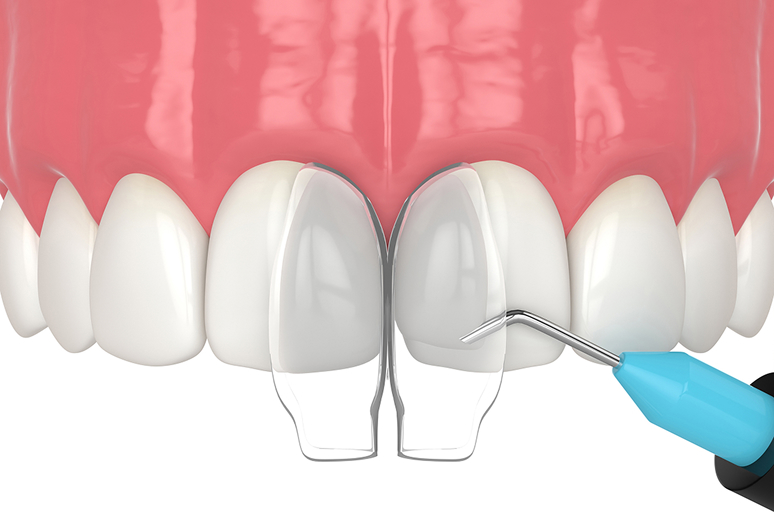
WHAT IS DENTAL BONDING?
Dental bonding uses a tooth-colored composite resin — the same type of material used for tooth-colored fillings — which is shaped directly on your tooth, hardened, and polished to blend in. Many cases take about 30–60 minutes per tooth, though timing varies.
Because the resin bonds to the surface of the tooth, bonding usually requires little or no removal of healthy enamel and no lab work. That makes it a conservative first step into cosmetic dentistry.
WHAT BONDING CAN FIX
Bonding works best for small to moderate changes on teeth that are otherwise healthy. Dr. Ghadoushi will let you know if another option would serve you better.
Small chips from sports, accidents, or biting something hard can often be rebuilt with resin in one visit.
Adding resin to the sides of teeth can close small gaps. Larger spacing may be better handled with orthodontics.
Spots or stains that don't respond to whitening can sometimes be covered with a thin layer of resin in a matching shade.
Teeth that are small, pointed, or uneven in length can be built up to look more balanced with their neighbors.
Where gums have receded, bonding over exposed root surfaces may help reduce sensitivity and improve appearance.
Older metal fillings can sometimes be replaced with tooth-colored composite when they need attention, for a more natural look.
BONDING VS. VENEERS
Both dental bonding and porcelain veneers can improve the look of front teeth, but they differ in durability and commitment. Bonding is done in one visit with little or no enamel removal, but composite resin is more likely to chip and pick up stains over time. Porcelain veneers are made by a dental lab, require some enamel preparation, and tend to hold their color and shape longer.
Some patients start with bonding and consider veneers later. Dr. Ghadoushi can explain the trade-offs for your teeth at your visit.
WHY CHOOSE TRUSTED DENTAL
Good bonding depends on careful shade matching, shaping, and polishing. Here is how we approach it.
We compare resin shades against your teeth and may layer more than one shade to better match the color of your enamel.
Most bonding is finished in a single appointment, with no temporary restoration to wear in between.
Bonding is applied to the surface of the tooth, so little or none of your natural enamel needs to be removed.
Bonding usually costs less than porcelain veneers or crowns, and financing options are available.
COMMON QUESTIONS
Answers to common questions about dental bonding at our Los Angeles office.
Bonding often lasts several years before it needs a touch-up or replacement, but lifespan varies by patient. Biting nails, chewing ice, grinding, and using your teeth as tools can shorten it.
Often not. For cosmetic bonding, the tooth surface is usually just lightly roughened so the resin can stick, which most patients find comfortable without anesthesia. Local anesthesia may be used if decay is being removed or the area is sensitive.
Composite resin can pick up stains from coffee, tea, red wine, and tobacco over time. Rinsing after dark drinks, brushing and flossing daily, and keeping regular cleanings helps, and the surface can be polished at checkups.
Usually, yes. Small chips can often be smoothed or added to in a short visit, and older bonding that has stained or worn can be replaced. Your dentist will check bonded teeth at your regular visits.
Small gaps can often be closed by adding resin to the sides of the teeth next to the space. Closing a larger gap with bonding alone may make the teeth look too wide, so orthodontic treatment may be suggested first.
It depends on the crack. Small chips and surface cracks on front teeth may be bonded, but deeper cracks or cracks in back teeth often need a dental crown for protection. An exam and X-rays help determine which is appropriate.
If a chip, gap, or stain bothers you, visit our Los Angeles office. Dr. Ghadoushi will check the tooth and let you know whether bonding is a good fit.