Replacing upper molars or premolars with implants sometimes calls for more bone height than the area has. A sinus lift gently raises the sinus floor and adds graft material so an implant can be placed securely.
WHY IT'S NEEDED
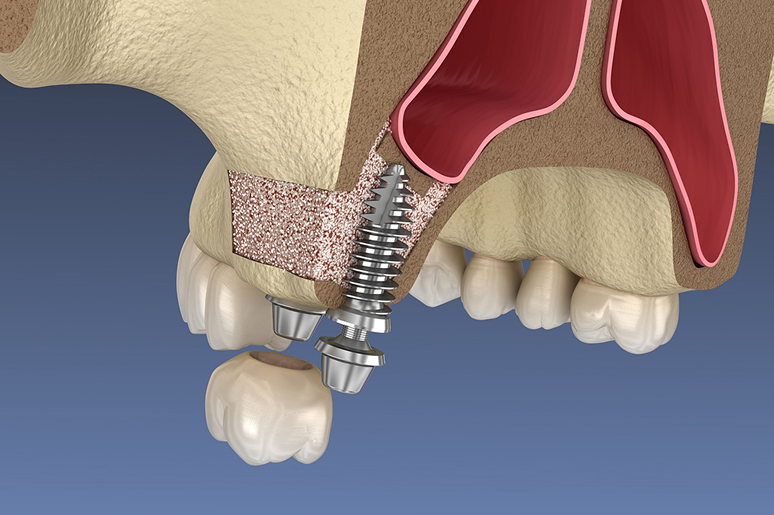
The maxillary sinuses are air spaces that sit just above the roots of the upper back teeth. In this part of the mouth, the bone between the gums and the sinus floor is often naturally thin. After an upper molar or premolar is lost, that bone can shrink further, and the sinus may extend lower into the space.
A sinus lift, also called sinus augmentation, carefully raises the thin membrane lining the sinus floor and places graft material beneath it. As the graft matures over the following months, it can provide the height needed to anchor an implant. For grafting in other areas of the mouth, see our bone grafting page.
SURGICAL APPROACHES
The technique depends mainly on how much bone height you have now and how much needs to be added. Your dentist will review your 3D scan and explain the options that apply to you.
Often used when very little bone height remains. A small opening is made in the side wall of the upper jaw, the sinus membrane is lifted, and graft material is placed in the space beneath it. The implant is usually placed later, once the graft has had time to mature.
A more conservative approach when a moderate amount of bone is already present. The sinus floor is raised from below, through the same site prepared for the implant. It's typically used when only a modest gain in height is needed.
When there is enough existing bone to hold the implant steady, it may be placed during the same visit as the sinus lift. The graft and implant then heal together, which can shorten the overall timeline and mean one recovery instead of two.
When the bone is too thin to stabilize an implant at first, the sinus lift is done on its own. After a healing period, the implant is placed into the newly formed bone at a separate visit, giving it a more solid base.

WHAT TO EXPECT
Recovery after a sinus lift comes with a few sinus-specific precautions. Your dentist will give you written instructions, but here is a general idea of what many patients experience.
If symptoms get worse instead of better, or you have questions along the way, call our office so your dentist can check on your healing.
WHY TRUSTED DENTAL
From the first scan to the final implant crown, your sinus lift is planned as one part of a complete treatment path at our Los Angeles office.
3D cone beam CT imaging shows the sinus floor, the thickness of the remaining bone, and nearby anatomy, helping your dentist choose the approach that suits you.
The sinus membrane is delicate, so the procedure is done with care and relaxed pacing. Local anesthesia keeps the area numb, and nitrous oxide is available if you feel anxious.
The type and amount of graft material are selected based on the space to be filled and your health history. Your dentist will explain the recommendation before treatment.
We plan and estimate the sinus lift together with your implant and crown, verify PPO benefits, and can discuss financing options, so there are fewer surprises along the way.
COMMON QUESTIONS
Common questions about sinus lifts, upper jaw implants, and what recovery involves.
A sinus lift adds bone to the upper back jaw by gently raising the sinus floor and filling the space beneath it with graft material. Over time, the graft develops into bone that can support a dental implant. It's used specifically in the area under the sinus, near the upper molars and premolars.
Your dentist will measure the bone height under your sinus with a 3D CBCT scan. If there isn't enough bone to hold an implant securely, a sinus lift may be recommended. Many upper implant sites, especially toward the front of the mouth, don't need one.
The area is numbed with local anesthesia, so most patients feel pressure rather than pain during the procedure. Afterward, swelling, mild congestion, and soreness are common for several days and usually ease with prescribed or over-the-counter medication. Nitrous oxide is available if you'd like help relaxing.
Sometimes. When there is enough existing bone to stabilize the implant, both may be done in one visit. If the bone is very thin, the sinus lift is usually done first and the implant placed after healing.
For most patients, normal sinus function returns after healing. Temporary congestion or a small amount of nasal bleeding can happen in the first few days. If you have a history of sinus problems, let your dentist know so it can be considered during planning.
Often, yes, for a short time. Changes in air pressure can strain a healing sinus, so your dentist may advise postponing air travel until the area has settled. If you have trips coming up, mention them when you schedule at our Los Angeles office so your timing can be planned around them.
Request a visit at our Los Angeles, CA office. We'll review your sinus and bone with 3D imaging, explain whether a sinus lift is needed, and outline your path to an upper jaw implant.